SMALL DOESN'T MEAN FAST
Eight years in. Still not rushing.
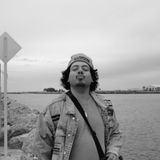
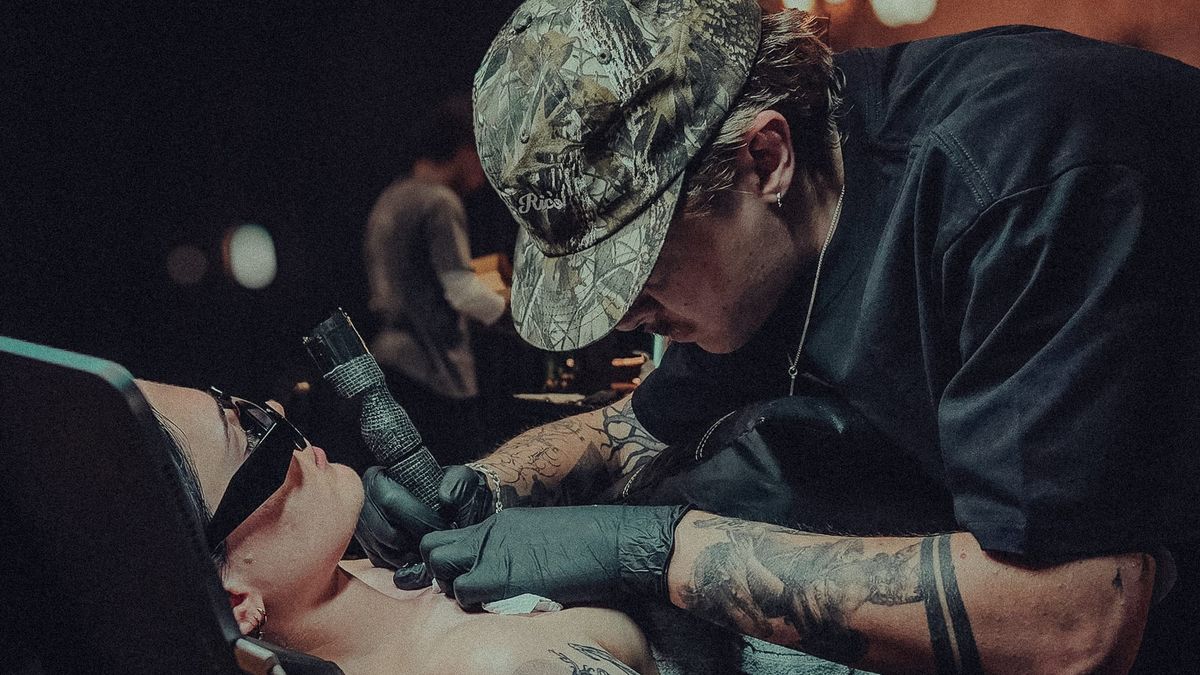
Porto Alegre sits in southern Brazil, a city of about 1.3 million people, with a massive freshwater lagoon to one side and the rest of the country stretching north behind it. Henrique 'Ricky' Fuhrich (@fuhrichtattoo) grew up there in the era of Jackass, Tony Hawk's Pro Skater and Limp Bizkit, the generation that came up on skateparks, punk music and tattooed musicians who looked like they'd figured something out that nobody else had yet.
For Ricky, the band was Blink-182. Absolute die-hard. The two members who changed the way he looked at tattoos were Tom DeLonge and Travis Barker, two people who wore their art like a language, like something that belonged to the life they were living rather than something added to it. Around them orbited a whole sonic universe of fast riffs, tattoos and teenage angst: NOFX, Green Day, Sum 41, Yellowcard, The Offspring, Foo Fighters, Linkin Park, Fall Out Boy and Paramore. But Blink-182 was the gateway drug for Ricky.
Tattooing wasn't a decision he made. It was a world he gravitated towards. He understood early that he wanted to be inside it, not watching from the sidelines.
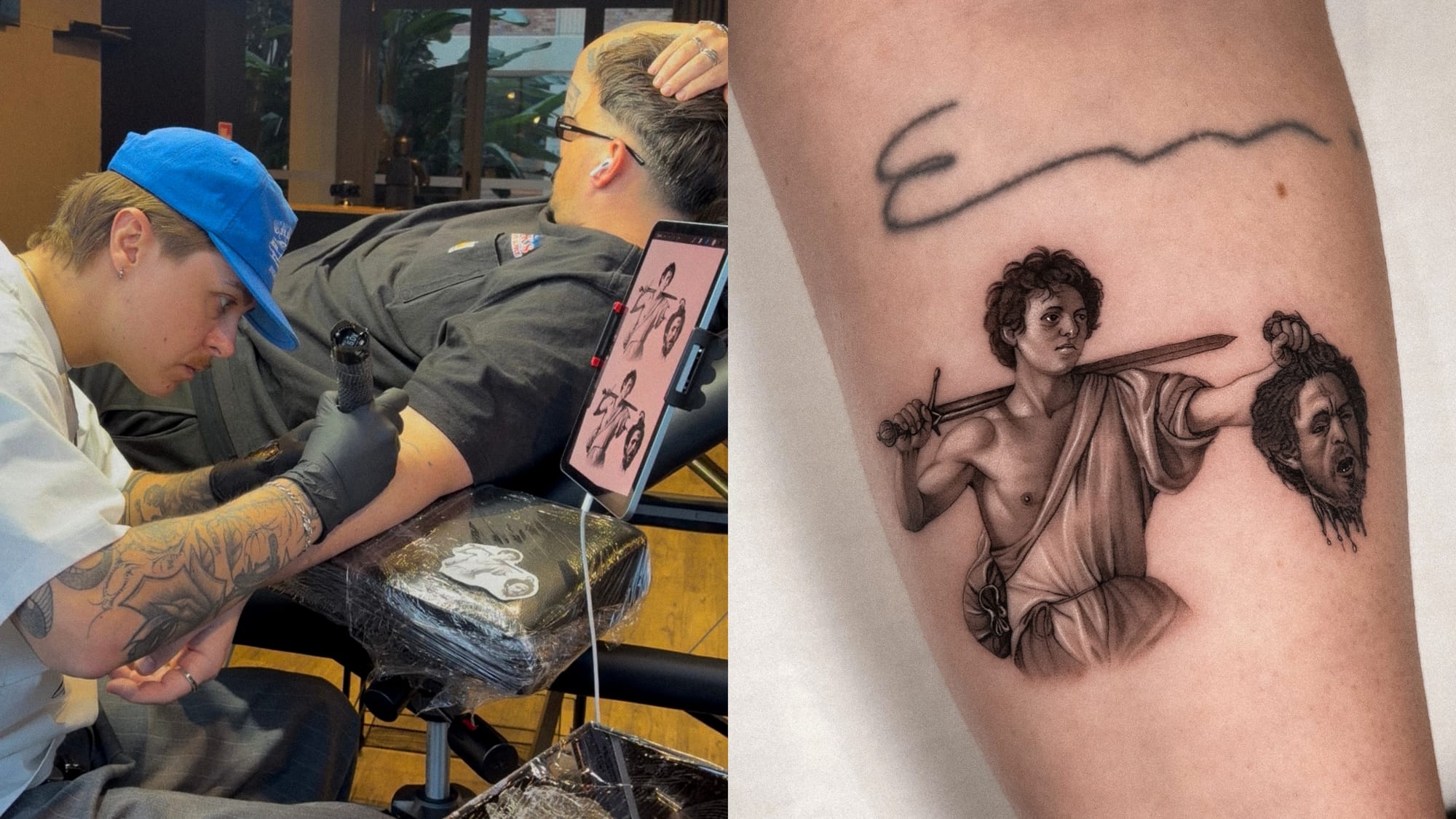
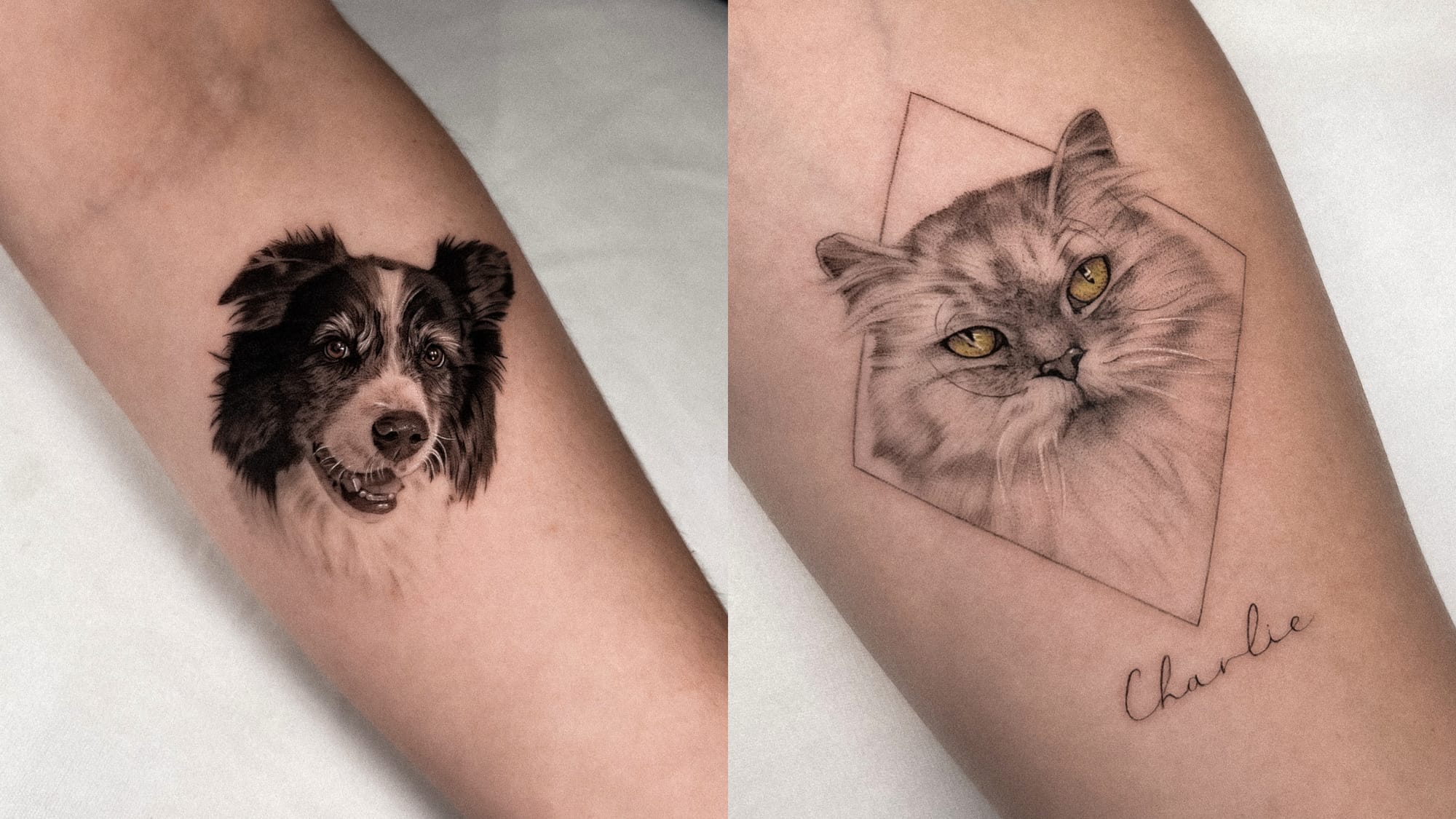
His obsession with art was already there from childhood: drawing, painting, the pull towards making things with his hands. Tattooing folded all of it together. And when he started looking seriously at styles, micro-realism was where his eye kept landing. The intricacy of it. The demand of it. The idea that you could fit an entire portrait into a space the size of a coin and have it hold.
He started tattooing in 2018, working first under Fillipe Pacheco (@pachecotattoo.br) in Brazil, an artist who'd spent years tattooing internationally and who ran a private studio that became Ricky's first real home in the craft. Pacheco had the kind of experience that accelerates a younger artist's development in ways that only become clear in hindsight.
When Australia came up, word of mouth about the quality of life, the industry and the scene on the Gold Coast made Ricky realise that's where he wanted to be. The tattoo scene wasn't dramatically different from what he'd known in Brazil. One thing he noticed immediately, though: the equipment was more modern, already looking like what you'd expect to see in studios today. A small detail, but a telling one. The industry here had moved a lot faster.
He landed at Mantaro Tattoo Studio (@mantarotattoo.studio) in Coolangatta, working alongside Bacca Ink (@bacca_ink), Vitor (@vktattoo_) and the crew in what turned out to be one of the most important chapters of his career. Three artists. One room. Everyone pushing to be the very best version of themselves.
"We really pushed each other to learn and get better at our own styles," he says. "I wouldn't be at the level I am now without those years working with them."
As the famous quote goes from Reese Bobby, semi-professional race car driver, amateur tattoo artist and volunteer fireman: "If you ain't first, you're last." That kind of workspace is where it actually happens. Small, no passengers, nowhere to coast. You either get better or you get left behind.
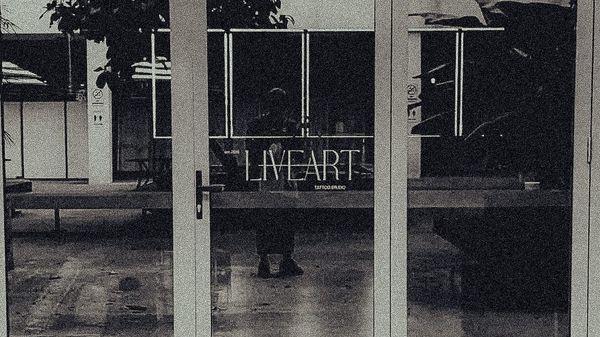
He's at LiveArt Tattoo (@livearttattoo) in Varsity Lakes now, still on the Gold Coast, eight years into tattooing and still doing the thing he decided he wanted to do before he ever picked up a machine.
Micro-realism doesn't give you much to hide behind. No bold outlines to anchor the work, no solid fills to land on when the detail gets away from you. What goes down stays down. At the scale Ricky works, every decision is visible, which also means every mistake is too.
And portraits are the hardest thing he does.
"There's zero room for error and a single mistake can ruin an entire tattoo."
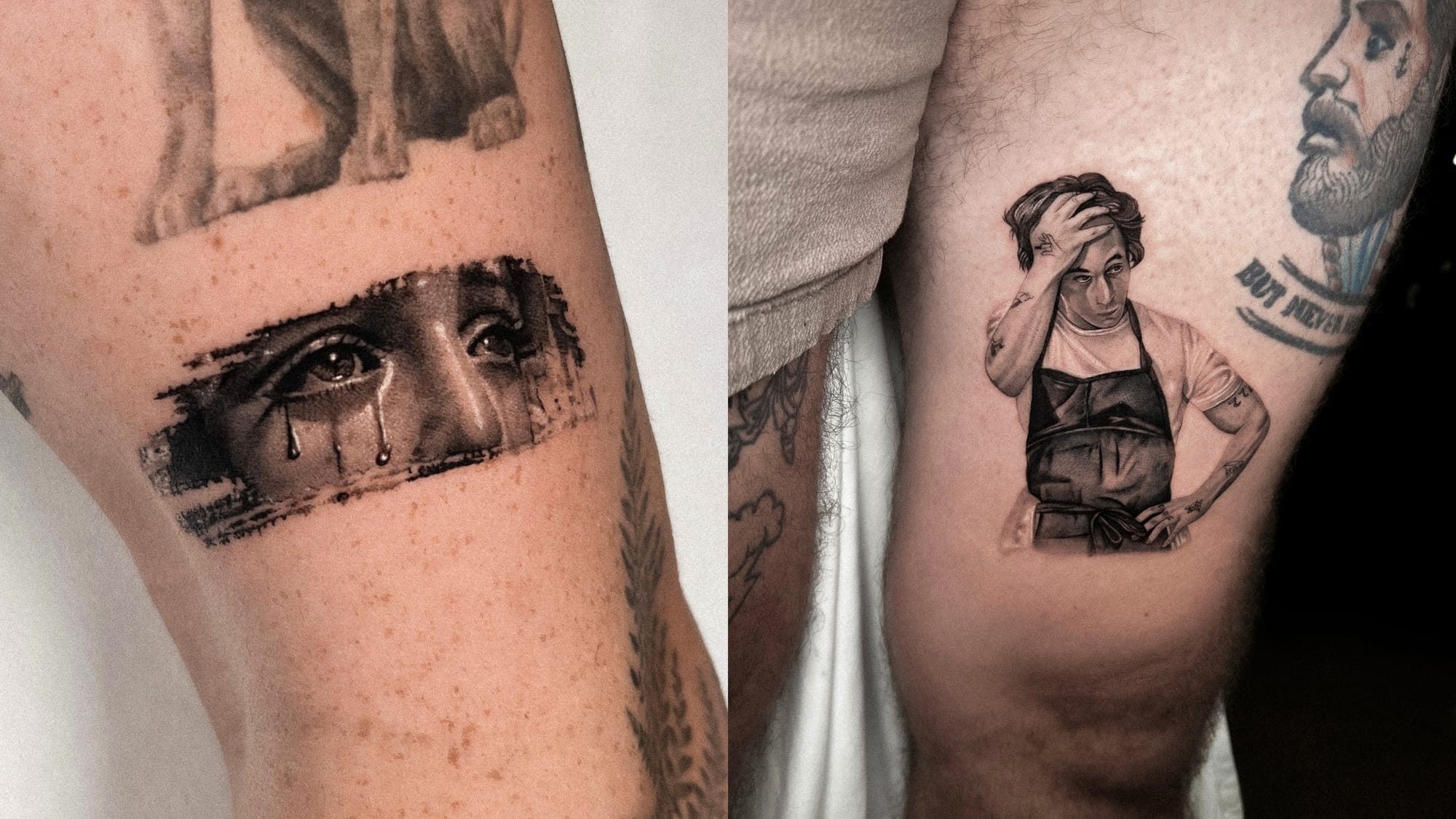
"There's zero room for error and a single mistake can ruin an entire tattoo," he says. "It's also usually very meaningful for the client and they expect a perfect job done."
His first portrait was of A$AP Rocky. He did it for a friend who was also an apprentice at the studio at the time. The stakes were obvious. A celebrity face, easily recognisable, someone who would know immediately if it was wrong.
"I was just nervous to be doing my first portrait and of a celebrity that's easily recognisable," he says. "It took me a long time to do it but I was extremely happy with how it turned out."
That piece opened a door. It led to more portraits, more of the hard work he does, and a growing understanding of why that difficulty is also where the most meaningful moments live.
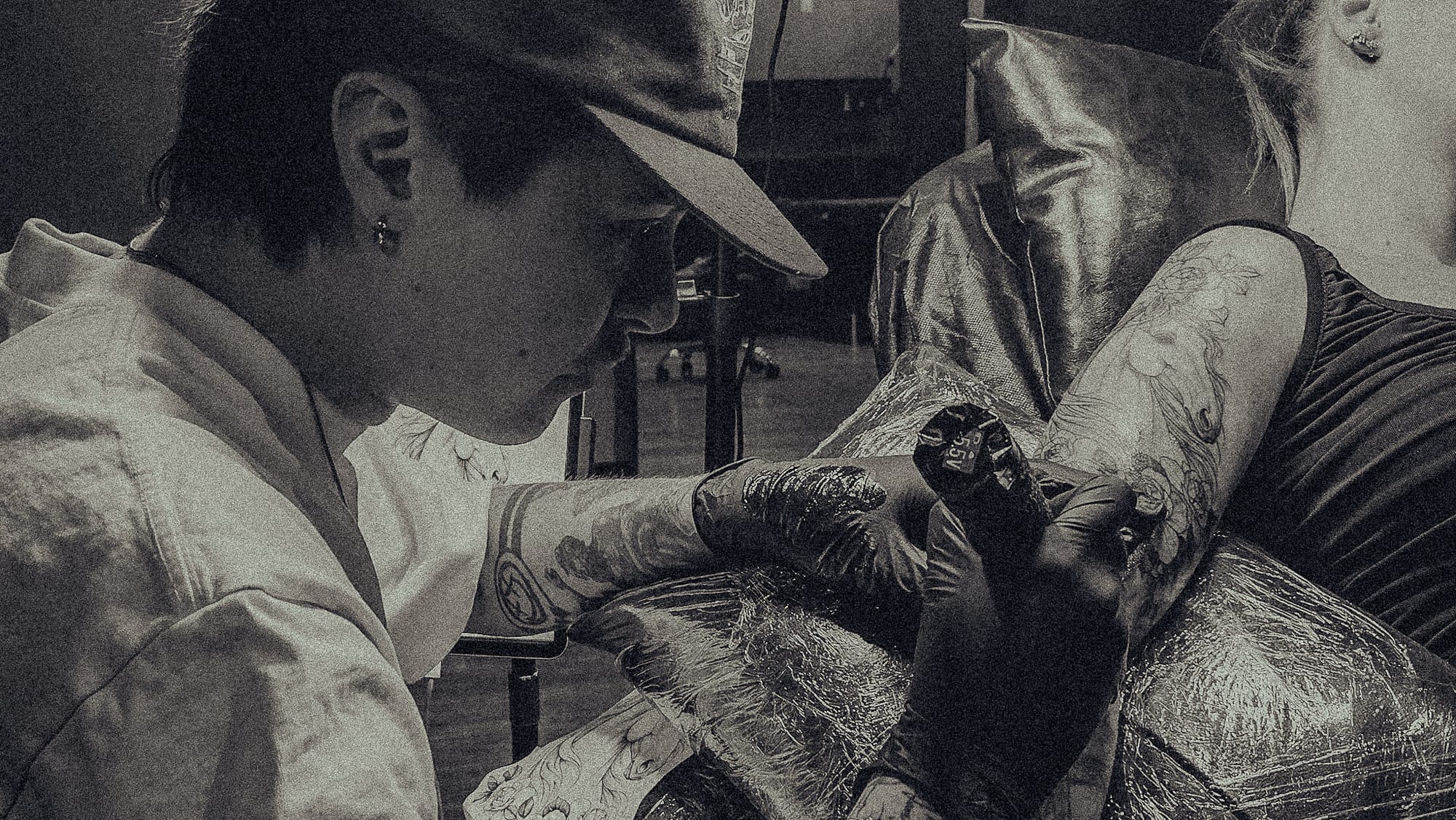
His process on a portrait starts before anyone sits in the chair: finding the strongest possible reference photo, adjusting contrast and shadow, identifying the details that need to be pushed to survive the translation onto skin. Then the composition. Then the tattoo itself, starting with the most important features, reading the skin throughout and making decisions in real time.
The breaks he takes across a full day aren't for his hands or his concentration. They're for the skin. Push past what it can hold and it stops holding what you're putting in. That's not a style issue. That's just skin.
Here's the thing people consistently get wrong about micro-realism: small doesn't mean cheap, fast and painless.
"If anything I've had pieces that took me way longer than it would if it was in a bigger size," Ricky says. More concentration, more passes, less margin to move quickly through anything. The scale that makes the finished piece impressive is the same scale that makes every stage of producing it slower and more demanding.
"There's no room for error and to be able to do them the right way it can never be rushed."
"If anything I've had pieces that took me way longer than it would if it was in a bigger size."
Clients sometimes arrive expecting a quick session because the piece is small. That conversation is part of the job. So is the other one: recommending a bigger size when he doesn't think the detail will hold. That's not an upsell. It's the difference between an artist and a yes person.
"I will always recommend a bigger size if I don't think the piece will hold well or if there's not going to be enough space for the details."
The ageing question follows micro-realism everywhere. Will it hold? Ricky's position is straightforward. Done correctly, it holds. "It's all about the execution and technique and how well you take care of it over time."
Pet portraits are the sessions that stay with him most often. Not because of the technical challenge, but because of what happens when the client sees the finished piece.
"Every time I do a pet portrait and my client actually cries of happiness and pure emotion when looking at the tattoo, that's very memorable for me," he says. "Recently I did a pet portrait and my client told me that her whole family cried when she showed it to them."
But there's one piece that sits differently from all the others.
He thought it was a car tattoo. A man's car, two kids holding balloons beside it. A nice piece, technically interesting. He finished it and felt good about the work.
Then the message came.
The client told him he hadn't wanted to put more pressure on him during the session, but the tattoo was a tribute to his late wife. The car was her dream car, one he'd bought specifically to drive her around in. The balloons were for his children to carry at her funeral.
"I felt very emotional when I got the message," Ricky says, "and extremely honoured to have been chosen to do this tribute for him."
That's what micro-realism at its best actually is. Not a technical exercise. Not a demonstration of precision. Not a flex. Not coverage for the sake of looking covered.
It's personal. Quietly, deliberately personal.
The people who choose it aren't chasing something bold enough for everyone else to read from across the room. They're carrying something close: a face, a place, an object, a moment, held against their skin in a size that only they and the people they choose to show it to will ever really see.
It's not fast fashion. It's not for the room. It's for the person wearing it, and maybe for the people who know why.
The man with the car tattoo never told Ricky what it meant while he was sitting in the chair. He didn't want to add pressure. He just wanted it done right.
That's the whole thing, really. Done right. Small enough to carry. Careful enough to last. Meaningful enough that it didn't need to be big.
Eight years in. Still not rushing.
@fuhrichtattoo · LiveArt Tattoo, Varsity Lakes, Gold Coast · @livearttattoo