THE QUIET DEATH OF TATTOO MAGAZINES
Nobody announced it. Nobody held a funeral. One day they were just gone.
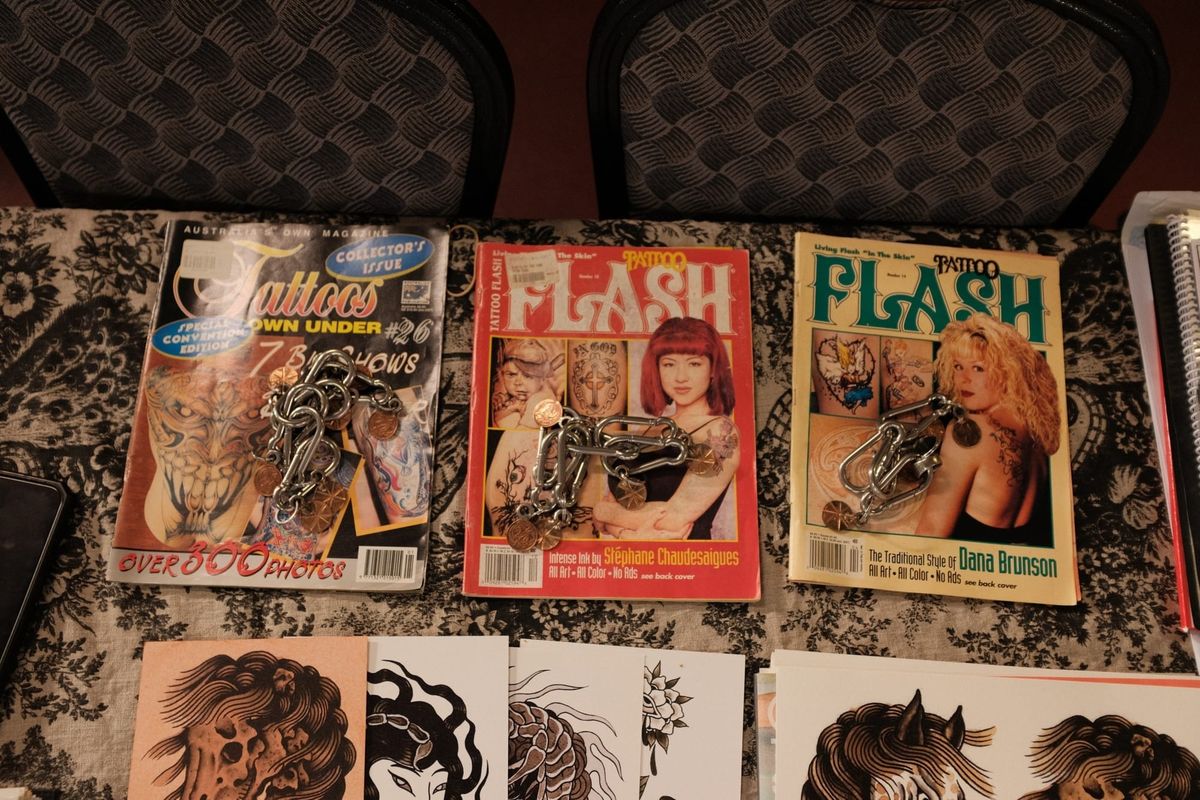
Not that long ago you could walk into a newsagent and there'd be tattoo magazines everywhere. Full sleeves on the cover, convention photos, artist interviews, weird little ads for machines and supply companies. You'd sit there flipping through pages looking at tattoos from all over the world thinking, how the fuck did they do that?
The writing wasn't always great. The photography was sometimes average. But there was something in holding the thing — the weight of it, the smell of the ink on the paper, the sense that somewhere out there people were taking tattooing seriously enough to document it properly.
Then they started disappearing.
What Actually Happened
The timing wasn't a coincidence. Instagram arrived and suddenly artists didn't need a magazine to reach an audience — they could post their work directly, get immediate feedback, build a following without waiting for someone else to decide they were worth a feature. The economics of print collapsed at the same time. Ads dried up. Distribution got expensive. Readers migrated online. Most of the magazines either quietly folded or became ghost websites that nobody updated anymore.
It made sense. You can't really blame Instagram for existing or artists for using it. If anything, the platforms gave working tattooists something the old magazines never really had — control over how their own work was presented, direct access to clients, a global audience without a gatekeeper in between.
The problem wasn't what replaced the magazines. The problem was what came after that.
The Exposure Economy
Somewhere along the way a different kind of tattoo media started appearing. Accounts with massive follower counts sliding into artists' DMs with the same copy-paste message:
Guaranteed exposure. Millions of followers. DM for rates.
Most of it was exactly what it looked like. Bought followers, botted engagement, recycled posts pulled from other people's feeds, zero genuine interest in the culture or the craft. Pay to play dressed up as promotion. The artists who fell for it once rarely did it twice.
It became a running joke in studios. Then it stopped being funny and just became background noise — the thing you ignored alongside the other forty unsolicited DMs.
What got lost in all of it wasn't the magazines specifically. It was the idea that tattooing was worth writing about properly. Worth photographing with intention. Worth spending more than thirty seconds on before moving to the next post.
The form changed, the pace changed, and somewhere in there the depth just quietly left the room.
What's Actually Missing
The thing about a good tattoo magazine — or a good piece of writing about tattooing, in any format — is that it treats the subject like it matters. Not in a reverent, glass-case way. Just in the basic sense of: this person has spent years developing a skill and a point of view and they deserve more than a caption.
Artists are interesting people. The ones who've been doing this for twenty years have stories that go nowhere near their Instagram grid. The studios that have been running in the same location for a decade have histories that never get told. The culture around tattooing — the travel, the expos, the supply chains, the arguments about machines and ink, the community that forms around all of it — is genuinely fascinating if someone bothers to look at it properly.
That's not a nostalgic argument for print. Some of the best writing about tattooing right now exists online. The format isn't the point. The attention is the point. The willingness to sit with something long enough to understand it before publishing is the point.
That's the thing that went missing. Not the paper.
Why We Started GOOD DAMAGE
This is the part where we're supposed to say we're going to fix everything and bring back the golden age of tattoo media. We're not going to say that because it would be embarrassing and also untrue.
What we're actually doing is simpler. We cover artists and studios we find genuinely interesting. Write about the culture the way it actually is rather than the way a PR brief says it should be presented. Take photographs that treat their subjects like human beings rather than content. Make something worth spending more than three seconds on.
You've already seen what that looks like. A decade of Dickfish. FNQ's first tattoo expo. A Melbourne tattooist who made a documentary because nobody else was going to. An exhibition where tattoo artists prove, year after year, that they don't just make tattoos.
We're online because that's where readers are. Instagram pulls people in, the website carries the full stories. And later — when the timing is right and the content deserves it — we'll print physical editions too.
Not to recreate what existed before. The old magazines died for real reasons and most of those reasons are still true. But there's something about seeing work on a printed page that a screen genuinely can't replicate. Something about a magazine sitting in a studio waiting room that changes the energy of the room. Something about a framed cover on a studio wall that means something different to the artist whose work is on it than any number of Instagram notifications ever could.
We're building toward that. Slowly, properly, without pretending we've already arrived.
The culture deserves something better than fake engagement pages and recycled content. We're not the only ones who think so — we're just the ones who decided to do something about it.
GOOD DAMAGE is an independent Australian tattoo culture publication. Online now. In print when it's ready.